A Fairer, More Representative
Way to Elect Our Leaders.
Californians want better choices on the ballot.
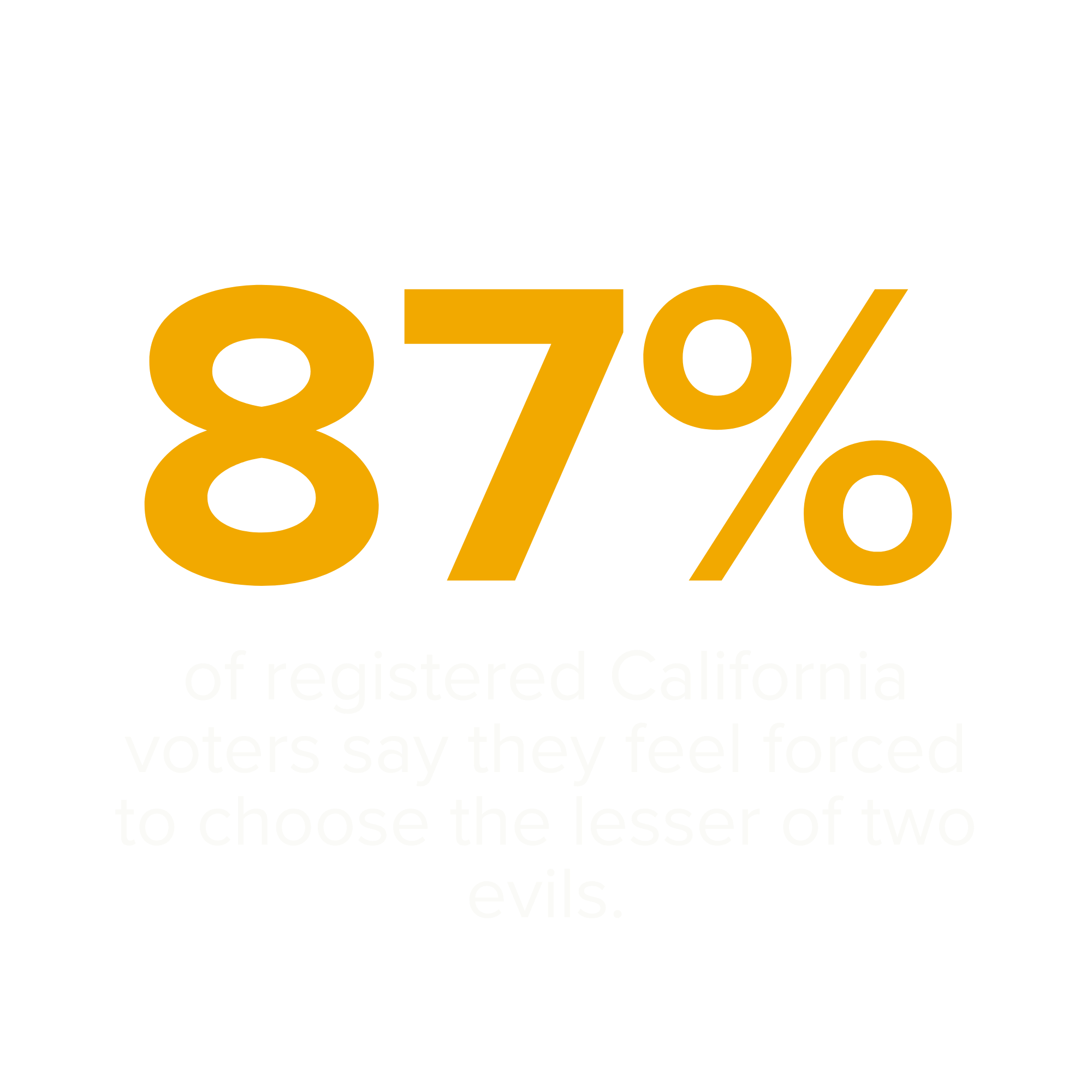
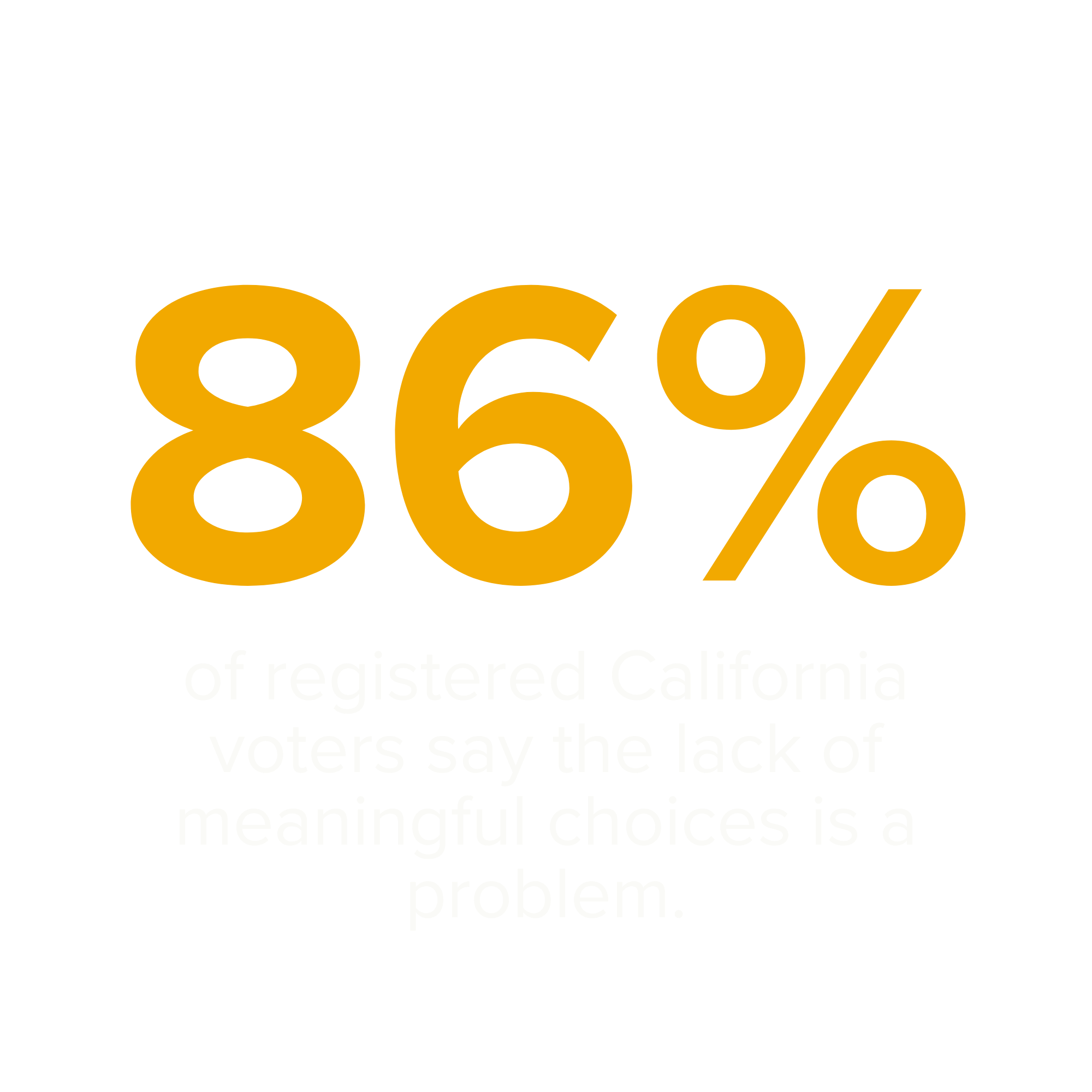
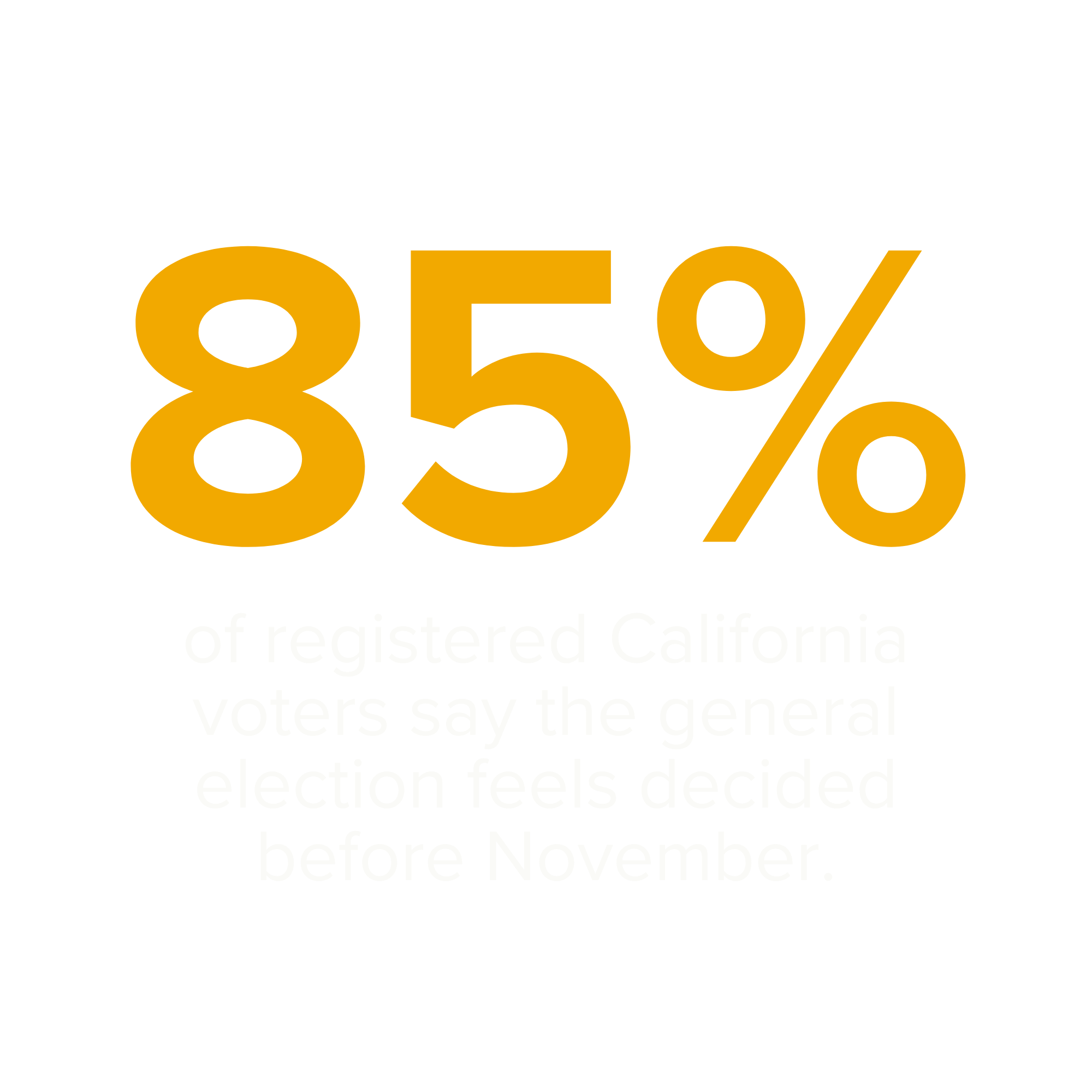
California voters opened the primary and a majority continue to support it. But two finalists is too few. With only two choices, many voters still feel like there isn’t a candidate on the November ballot that genuinely represents them.
Top 3 is a fairer election system that gives voters better choices, produces better representation, and creates more accountability.
Better Choices
Top 3 gives voters more viable candidates to choose from and a real say in who represents them.
Three finalists in the November election greatly reduces the risk that a major party’s candidate will be shut out. Independent and third-party candidates have more room to compete without being treated as spoilers.
Voters can support the candidate they genuinely prefer without fearing that their choice will be wasted or help elect the candidate they like least.
More Accountability
Public office is a responsibility, and leaders should have to keep earning the public’s trust.
Top 3 gives elected officials a stronger reason to listen, deliver, and stay focused on the people they serve and on solving problems.
That leads to more responsive and responsible leadership.
Better Representation
Elections should produce leaders who reflect the will of the people, not only party activists, special interests, or donors.
Under Top 3, candidates must be able to earn support from people with different views and priorities.
The winner is the candidate who best reflects voters’ choices.
HOW TOP 3 WORKS
All California voters, unaffiliated or party-affiliated, are eligible to vote in a primary election that includes all candidates. Voters choose one candidate.
The top three vote-getters advance to the general election giving voters more choice in November. It ensures that a broadly preferred candidate isn’t eliminated too soon.
Step 1: All candidates compete in an all-voter primary election.

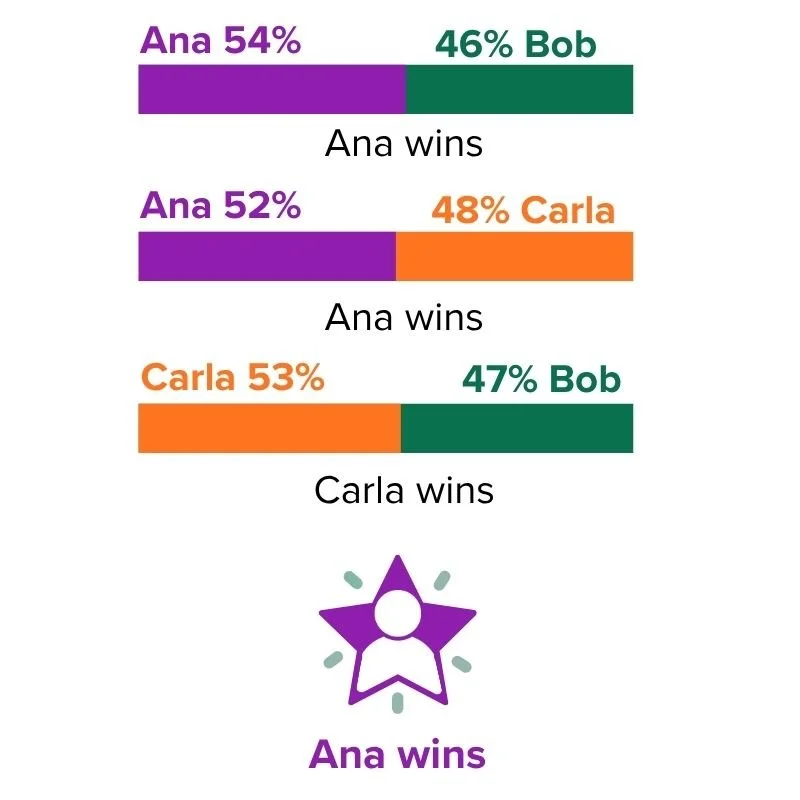
In the general election, voters say who they prefer in each head-to-head matchup of the 3 finalists.
This prevents spoilers and wasted votes.
Step 2: Voters choose who they prefer in each matchup.
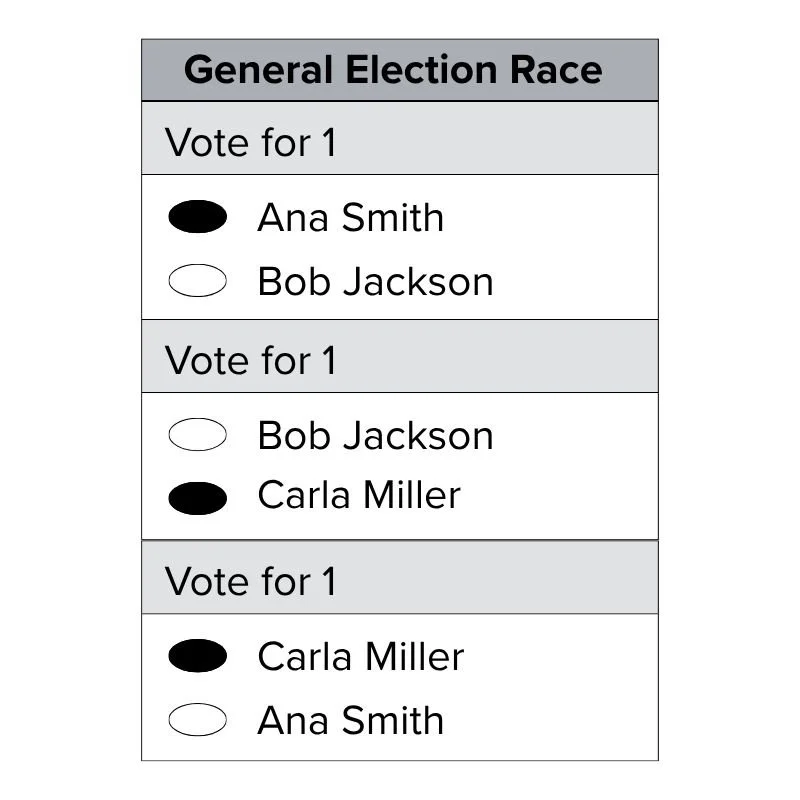
Step 3: Votes are tallied and candidates are compared head-to-head.
Votes are tallied and finalists are compared head-to-head.
This makes the election contest a level playing field. No candidate is eliminated early or treated as a spoiler.
The candidate who defeats every other candidate head-to-head wins the election. Every voter matters and every voter preference in head-to-head matchups is worth the same.
In the extremely rare case that every candidate loses to another candidate, the winner is the candidate with the smallest loss.
The winner has demonstrated an ability to earn support across a broader share of the electorate.